-
May the 4th be with you!
It is serendipitous that May 4th marks the launch of this journal as it would be considered a blasphamas mockery by any of the original masters. Life is different now and we must adjust to the societal norms of the lives we now lead. While the Jedi code is still at the core of my thoughts (There is no emotion, there is peace. There is no ignorance, there is knowledge. There is no passion, there is serenity. There is no chaos, there is harmony.), my daily focus is concentrated into to four simple principles. I look forward to sharing this knowledge with my comrades and evolving the heart of the Jedi order.
-
Youth is wasted on the young…
And a sad repartee… wisdom is wasted on the old. The value of youth unfortunately is seldom understood until it fades. While the lessons learned shape wisdom, I often wonder how much more we could accomplish if we valued the teaching(s) of those with a vested interested in our development. How many battles, anxieties, and mistakes could be avoided? How much more value, character, and impact could we develop? Most of the answers to pivotal life questions peacefully decay in unsettled graves of our predecessors. While I studied the words of my mentors, it was with a discerning mind. It questioned guidance and personalized truths.
This could be the juxtaposition of old souls. A calmness ripe to ingest the words of elders and mentors, but through youthful lenses. They are the minority, but essential to the survival of hope and progress in the collective consciousness.
For the rest of us, who may feel we are “old too soon and wise too late…”, we must altruistically plant trees of knowledge to bear fruits we may never see blossom.
This is the way… 😉
-
Repression is a path to the dark side…
Discussions about repression often highlight the psychological, emotional, and social consequences of burying feelings, desires, or truths. Common themes include the inevitability of repressed emotions resurfacing, the toxic nature of stifled feelings, and the distinction between healthy self-control and destructive repression. This poem from a Jedi master brings to light the choice and consequence of repeated internal abandonment.
- When you repress vulnerability it becomes armor you prove yourself over and over so no one can see the soft spot that you’re guarding.
- When you repress your intuition, it becomes indecision because you’ve trained yourself not to trust yourself.
- When you further repress self trust, it becomes permission seeking and you end up trading your personal truth for committee approval, and calling it action.
- When you repress your needs and desires they become resentment you punish yourself for wanting and you punish others for not guessing what you need.
- When you repressed your guilt it becomes over giving, and you pay emotional debts that nobody asked you to repay.
- When you repressed disappointment, it becomes fake optimism you slap a smile over the truth because honesty feels like failure.
- When you repress your hurt it becomes sarcasm and your wit becomes sharper than the wound you never tended.
- When you repress your ambition. It becomes procrastination you hide your brilliance behind delay, and you call it timing.
Just as stagnant water becomes fetid and toxic, so it is with our emotions.” — Unknown
When we are young, we embrace bad habits to help us traverse chaotic environments. These repressions are survival hacks turn into habits that we shrink into tidy emotional luggage. We must be intentional in identifying and unpacking the these dark corners before they define our future.
-
Survivorship Bias
During the early wars, X-Wing fighters suffered heavy losses in dog fights with imperial fleets and strategic targets. Crews had a 1 in 4 chance of getting shot down and killed every time they flew. Even the X-wings that made it back were often riddled with holes. To protect the crews, the initial thinking was to add armor plating to the areas where most of the holes were observed in the fighter jets that limped home (the wings and tail).
The engineers made the same mistake most of us made. They were studying the success stories and trying to learn from the winners. But the data they were observing was biased in that it only contained information that survived, hence the term “survivorship bias”.
What they needed to do was study failures. The X-Wings that got shot down were hit in the cockpit and fuel tanks, but it was hard to figure this out because these planes crashed in places where they could not be easily studied.
Survivorship bias is our tendency to study the people or companies who “survived” or were victorious in a certain situation while ignoring those who failed. In many endeavors, “the failures” used the same principles as “the winners”, but they were not so lucky and ended up failing.
-
Operation 66
As I think about the new year, I reflect on the goals that were set, those met and areas for a possible reset. New Years day has always felt like an inopportune time for change; it should be met with great momentum and renewed vision.
I have been looking for a wellness challenge to help synchronize focus with priorities and stumbled on “Operation 66”. This 66-day wellness challenge focuses on building sustainable, healthy habits through a set of daily rules designed to be achievable long-term. I have adopted as follows:
- Start day with intention/goals (written)
- 60 minutes of fitness – (stretching is a must).
- 16 ounces of water in the morning.
- No Fake foods, fake intimacy, fake entertainment. Spend this time on hobbies and connection.
- Mental health stimuli like Reading, meditation, gratitude and journaling.
- Follow a 90/10 diet (90% whole foods, 10% indulgence)
- Sleep 7+ hours a night
The name resembles the contingency orders (most well known being Order 66) and feels mores sustainable than 75 Hard.
-
Action is the antidote…
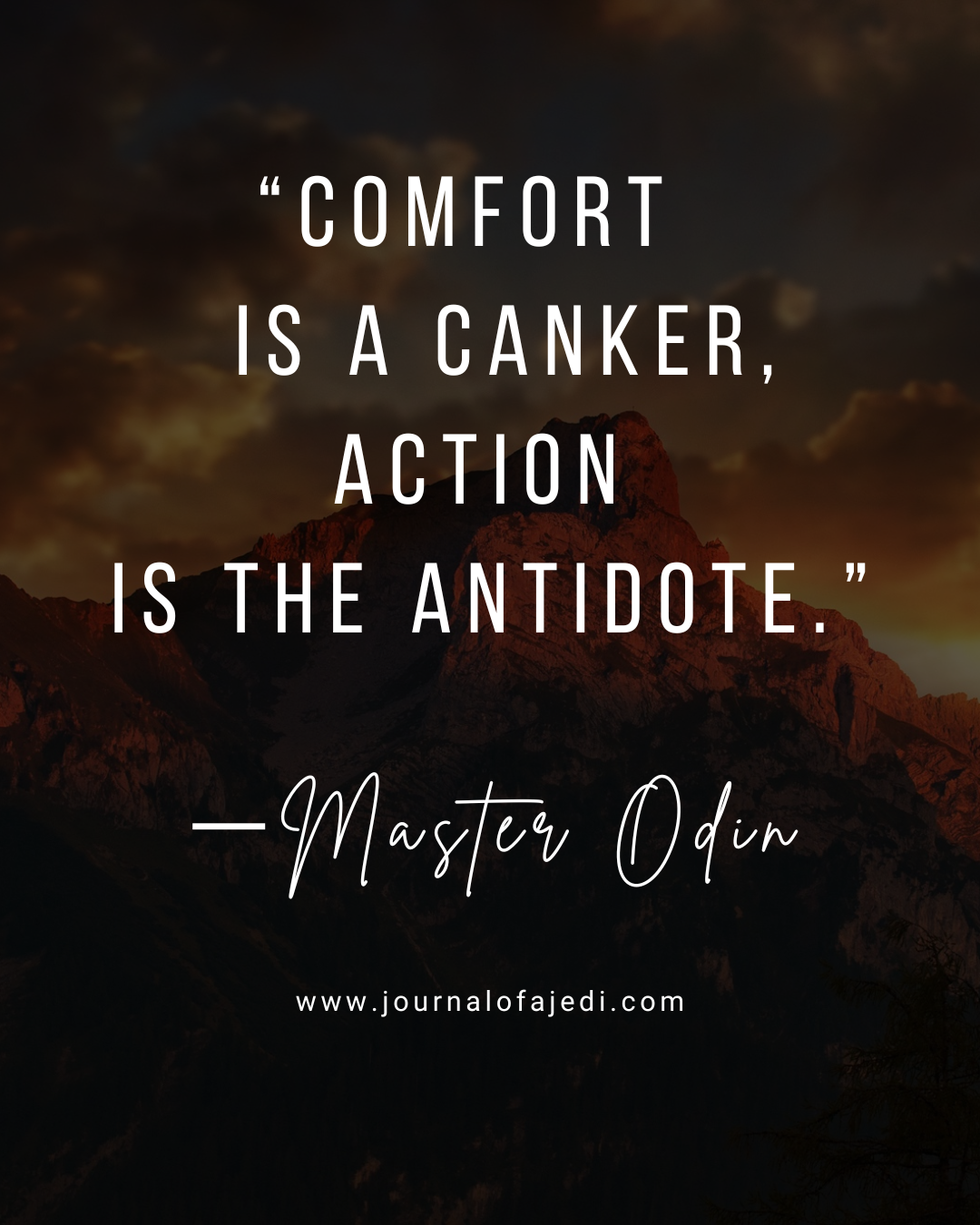

This quote materialized in a recent meditation while preparing for a mentee discussion. Two subjects that have immense impact on success include one’s comfort zone and the speed to take action. Getting out of one’s comfort zone can be an area that drives anxiety and fear in most humans. Comfort is cozy; I can feel the warm, buoyant, airy sensation in a simple fleeting reflection. Unfortunately, it stifles growth, lowers motivation, tempers our ability to maximize a flow state. While it’s a great place to recharge and reflect, it’s a limiting place to exist.
Taking action on the other hand releases us from anxiety, accelerates leaning and rewards goal achievement with constructive deposits of dopamine. Action turns intention into impact, shapes identity, builds self confidence, and creates momentous habits that drive sustainable successes.
-
5 brutal truths about the mind…
During a recent seminar, we broached the topic of psychology and some blind spots that we must all b aware of; here are my cliff notes.
- We are not as rational as we think. Most decisions are driven by emotion, habit, and unconscious biases. Reasoning often comes after the fact, as a way to justify choices we’ve already made.
- The mind lies to protect the ego. Defense mechanisms—denial, projection, rationalization—exist to shield your self-image, but they distort reality and relationships.
- Most people don’t fully know themselves. The “self” you think you know is a story stitched together from limited awareness. Others often see aspects of you more clearly than you do.
- People rarely change without pain. True personal change usually requires discomfort, crisis, or loss. Motivation is often born out of suffering, not comfort.
- Happiness is fleeting. The brain is wired for hedonic adaptation: wins and losses both fade, and the baseline mood returns. Lasting happiness usually comes from meaning, not pleasure.
The italics are powerful words that I intend to reflect on. What are my biasses and how do I justify them? What blind spots do I have in my reflection of self image? In what aspects of my life can I be more self-aware? What is the real process of comfort? What connections can I see between happiness and meaning in my own life?
-
Critical conversations
One of the hardest distinctions to make is what is a teaching moment versus a learning moment as a mentor and leader. There is that moment when you realize you are going to have a critical conversation and you must analyze the environment, relationship with the individual before making a decision on how you choose to engage them. One lens to wear consistent surrounds the concept of first seeking to understand. If someone does not know how much you care, they will not care how much you know.
Make the distinction between needing to be right and needing to do the right thing. Sometimes proving you are right is not what the situation needs.
Looking through the bark in your eyes to see the dust in someone else’s. Realize that you have your own bias that could mislead the way that you look at the world.
-
My three moderators…
The voices of masters, mentors, and antagonists tend to shape the language we use in inner dialogue. These powerful lessons shape and mold our character and path, but we must maintain a connection to self. There are three judges I have continued to count on during this introspection:
- The 8 year old – The child in all of us is always present beneath the programming, training and development. At the core, we should still have synchrony with the purity of our youth.
- The 80 year old – How will the future version of me judge the decisions I have been making? What can I do to better align to the wiser, developed version of myself?
- Me, tomorrow – When you reflect on what was accomplished in the previous day, am I energized? What habits am I forming or extending with my actions today?
Ending with a lens that is grounded in the present ensures that we don’t live too far beyond the current state. Youth and wisdom are guides, but the span of control is in the moment. There are definitively those who may show appreciation, pride and a vested interest in the individual they see; but the three stakeholders above will typically generate the cleanest reflection of progress and misalignments.
“You don’t need to be accepted by others. You need to accept yourself,”
-
Facing the storm
There’s a great lesson that is introduced early in training that compares cows to buffalo when a storm is approaching. Cows see the storm approaching and walk/run away from it; trying to avoid the pain. Buffalo will strategically walk into the storm knowing the sooner the inevitable is faced, the sooner it will pass. One will spend more time in the storm while the other cuts the time in half by embracing the difficulty ahead. They act with intension which avoids the prolonged suffering that their counterparts experience. Being intentional in the face of difficulties can have a material impact on the experience and outcome.
-
Confirmation Bias
I have found one of the most difficult areas to teach young padawans is how to navigate the untruths that our brains may feed us. The fact remains that our brains are predictive machines and not necessarily truth machines. It actively predicts and anticipates future events based on past experiences and current sensory input. This predictive tool was developed in ancestry and has been passed to newer generations as part of the survival gene. What was once crucial for survival and efficient decision-making, can sometimes lead to inaccuracies or illusions in our current realities.
The new danger is using this cognitive bias as a truth in day to day life. In compiling corrupt code in the operating language we use to interact with a non-static environment. The blind spots can hinder objectivity, reinforce stereotypes, and impact sound decision making.
Critical thinking is mandatory; young Jedi must seek diverse perspectives, consider alternative outcomes, and be open to change.
“Confirmation bias is twisting the facts to fit your beliefs. Critical thinking is bending your beliefs to fit the facts. Seeking the truth is not about validating the story in your head. It’s about rigorously vetting and accepting the story that matches the reality in the world.”

-
Subscribe
Subscribed
Already have a WordPress.com account? Log in now.
 Journal of a Jedi